Case Study Goal
How I Designed Vibee’s AI Onboarding to Improve Understanding, Trust, and Conversion
My Role
Product Designer
Company
Popcorn AI Tech Inc.
Service
Ditto
Vibee

Vibee: AI-based Community app
Project Overview
〰️
Project Overview 〰️
What is the Vibee?
Vibee is an AI-based community app where users share photos to express their vibe, which the AI interprets to form small, meaningful groups.
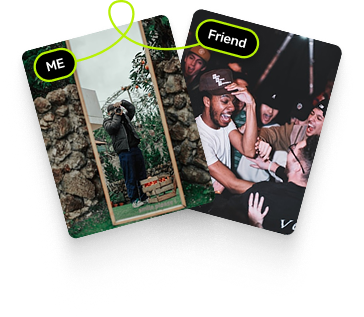
In Vibee, photo sharing is the critical first action unlocking AI insight and community access, but for first-time users it carried high friction around privacy, self-expression, and AI’s role.
📝 No clear explanation
⏱️ High-risk action too early
📱 Didn’t feel like a real service
The Problem
At the photo upload step
during onboarding
30–40%
drop-off
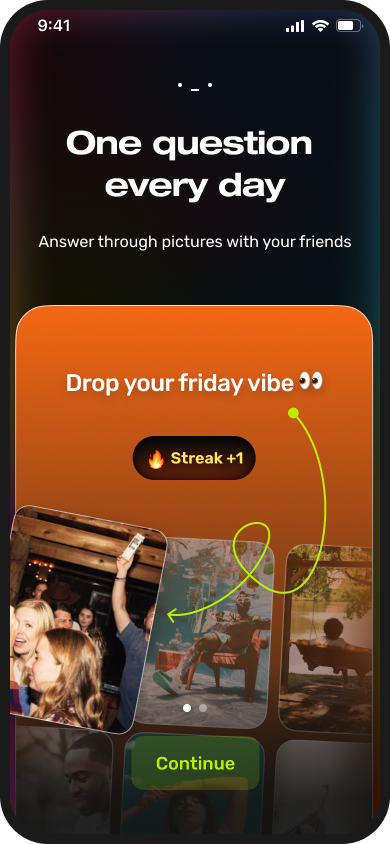
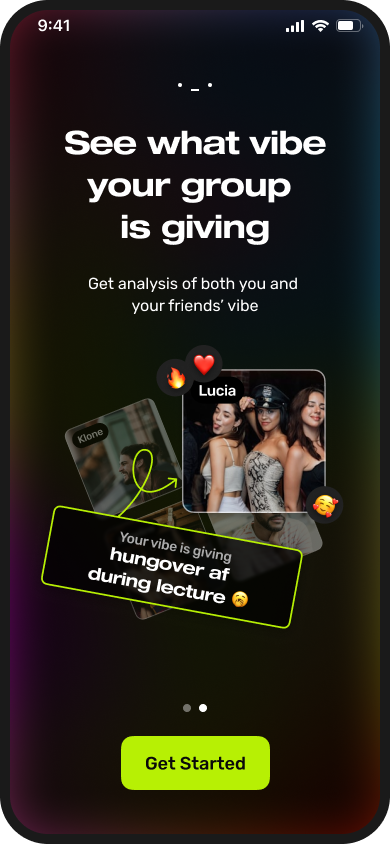
I designed Vibee’s first-time experience, focusing on onboarding flow, motion, and micro-interactions to help users understand the product, build trust, and confidently take their first action.
My Scope & Contribution
Why?
A high-risk action was introduced before trust was established.
Research
〰️
Research 〰️
Help users form a clear mental model of Vibee before asking them to participate, by clarifying what the product is, how it works with others, and what will happen after the first action.
Understand the Product: User Goal
I’m not fully sure what Vibee does yet.


What does the AI look at when I upload a photo?
Who will see this, and how will it be used?
These questions consistently surfaced during early onboarding walkthroughs and internal testing.
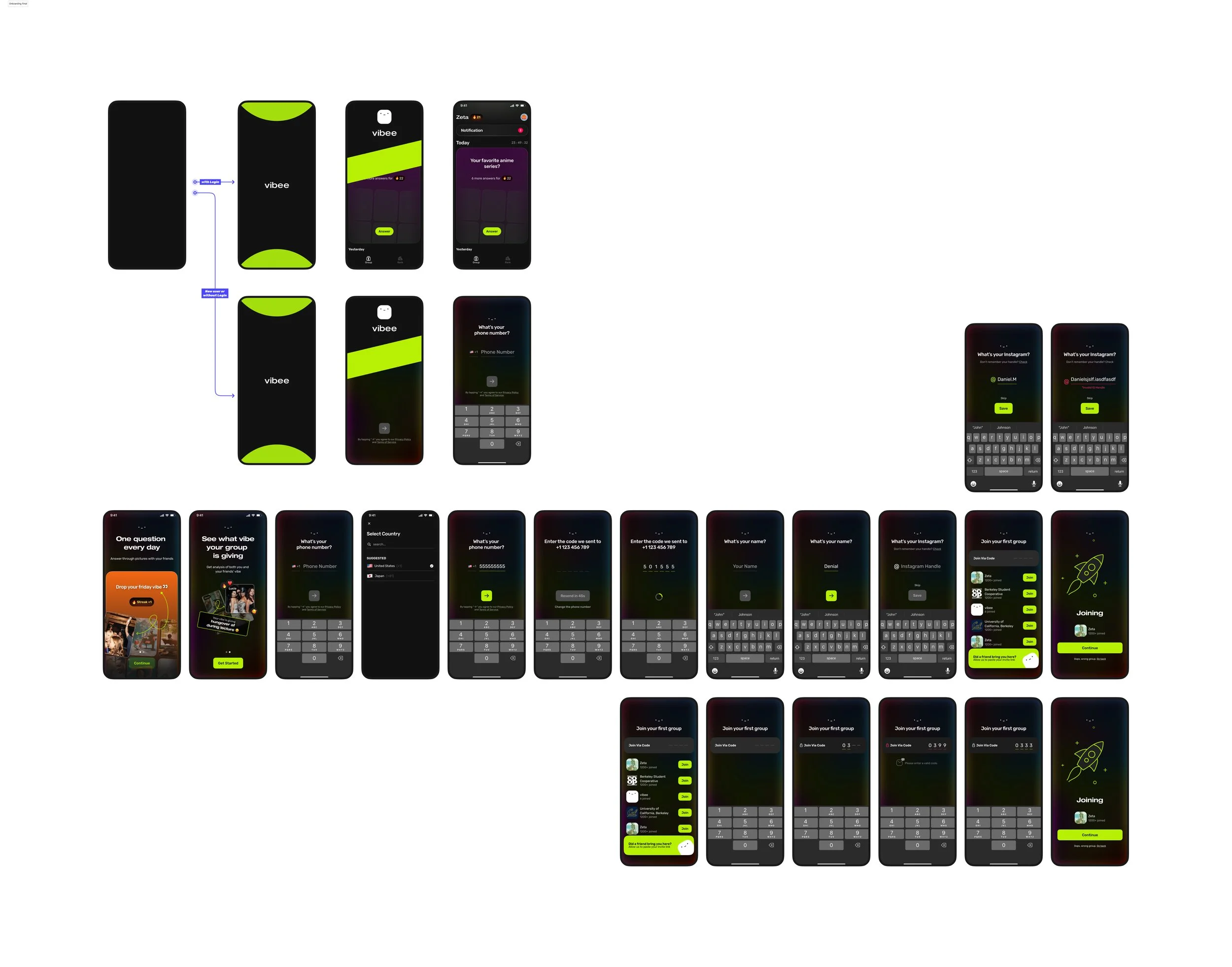
The Old Flow
This was the onboarding experience when I first walked through Vibee as a new user.
No product explanation, splash screen, or system feedback was provided throughout the flow.
This made photo upload feel like a high-risk request rather than a natural next step.
Aligning on the Problem
This was the onboarding experience I encountered as a new user, which revealed a key misalignment early on.
“We need to move fast and get the product ready for launch.”
Focus on speed and launch readiness
From onboarding walkthroughs and early testing
- Users didn’t understand what Vibee does
- Photo upload required trust too early
- No feedback or progress signals during onboarding
“The core issue wasn’t missing features, but missing clarity, trust, and guidance before asking users to share a photo.”
This reframing shaped how I approached the redesign of Vibee’s onboarding experience.
But I needed to validate whether this was truly the primary user problem.
Define
〰️
Define 〰️
Research Setup
We conducted interviews and usability testing with 14 internal and potential users to validate whether the early onboarding experience was truly the primary blocker.
Primary Insight
Early onboarding friction prevented users from understanding the product and trusting the experience, causing most drop-offs before they could reach Vibee’s core value.
Why users struggled with Vibee’s onboarding
The biggest blocker wasn’t usability, but asking users for trust before they understood the product.
Where do I start?
Users struggled to understand what Vibee does or where the experience begins.
What does the AI actually do?
Users didn’t know what the AI analyzed or what outcome to expect.
Photo upload before trust
Users were asked to upload a personal photo before understanding privacy or usage.
This was the moment most users decided to leave.
Is this working?
During key moments, users received little feedback or progress signals.
Who sees this?
Users were unsure who could see their photos or how groups worked.